
Detour
Discover new walking routes tailored to your interests.
00
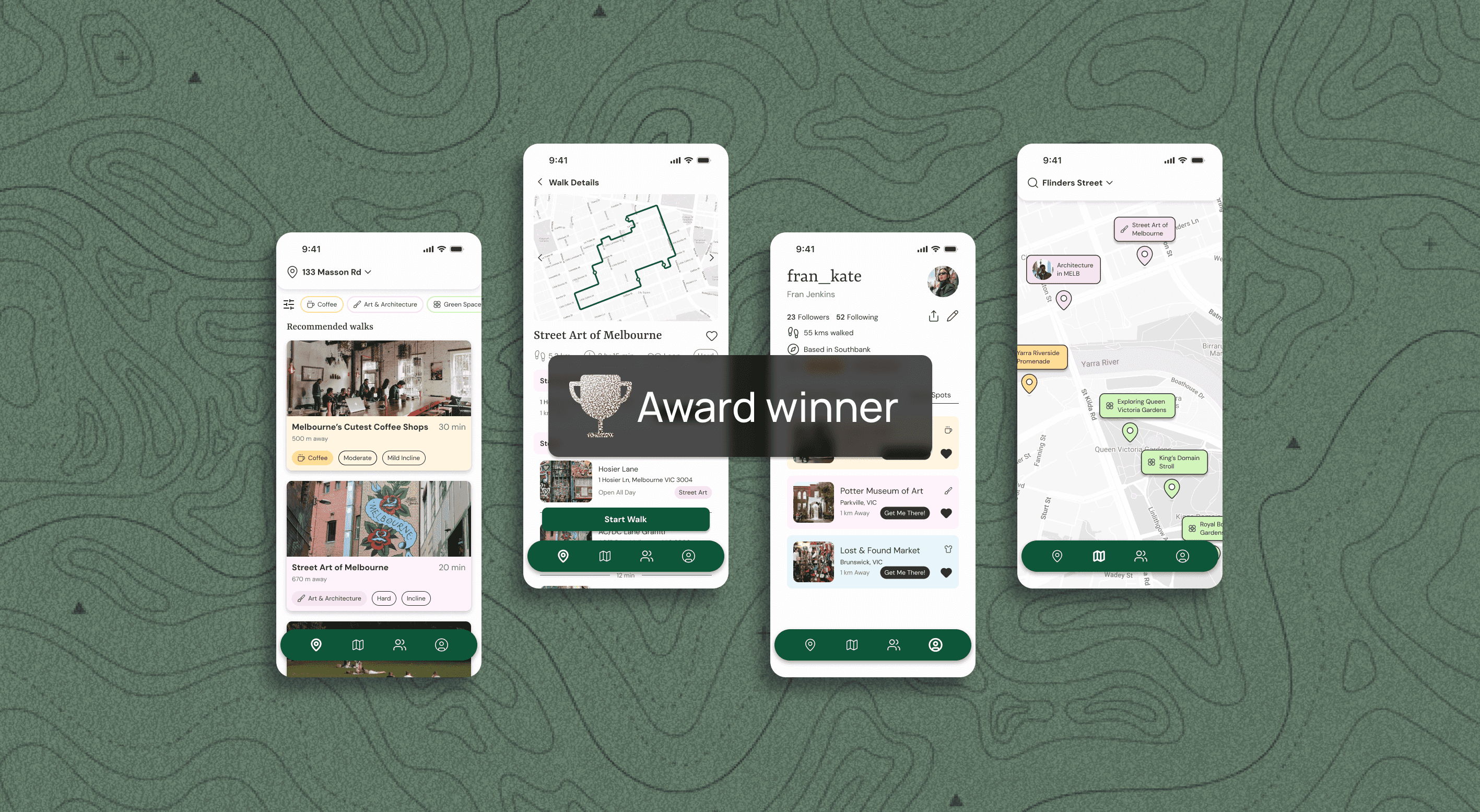

Winner at 2025 CISSA Product-thon
Problem Overview
Walking is a common part of many Melburnians' routines, often used to unwind after work or uni. Yet, when walking is their method of relaxation, many find that the cognitive load of planning a new route leads them to default to the same few familiar routes. In doing so, they miss out on valuable opportunities to explore new areas, discover new go-to businesses, and connect to the city around them.
Project Overview
Detour helps people discover the more mundane parts of Melbourne culture through everyday walking routes tailored to their interests. Instead of just the fastest path from A to B, we curate walks that highlight local culture and spaces, like green spaces and street art, with optional stops at local businesses along the way to grab a coffee, matcha, or a sweet treat to enjoy as you walk.
How Detour works
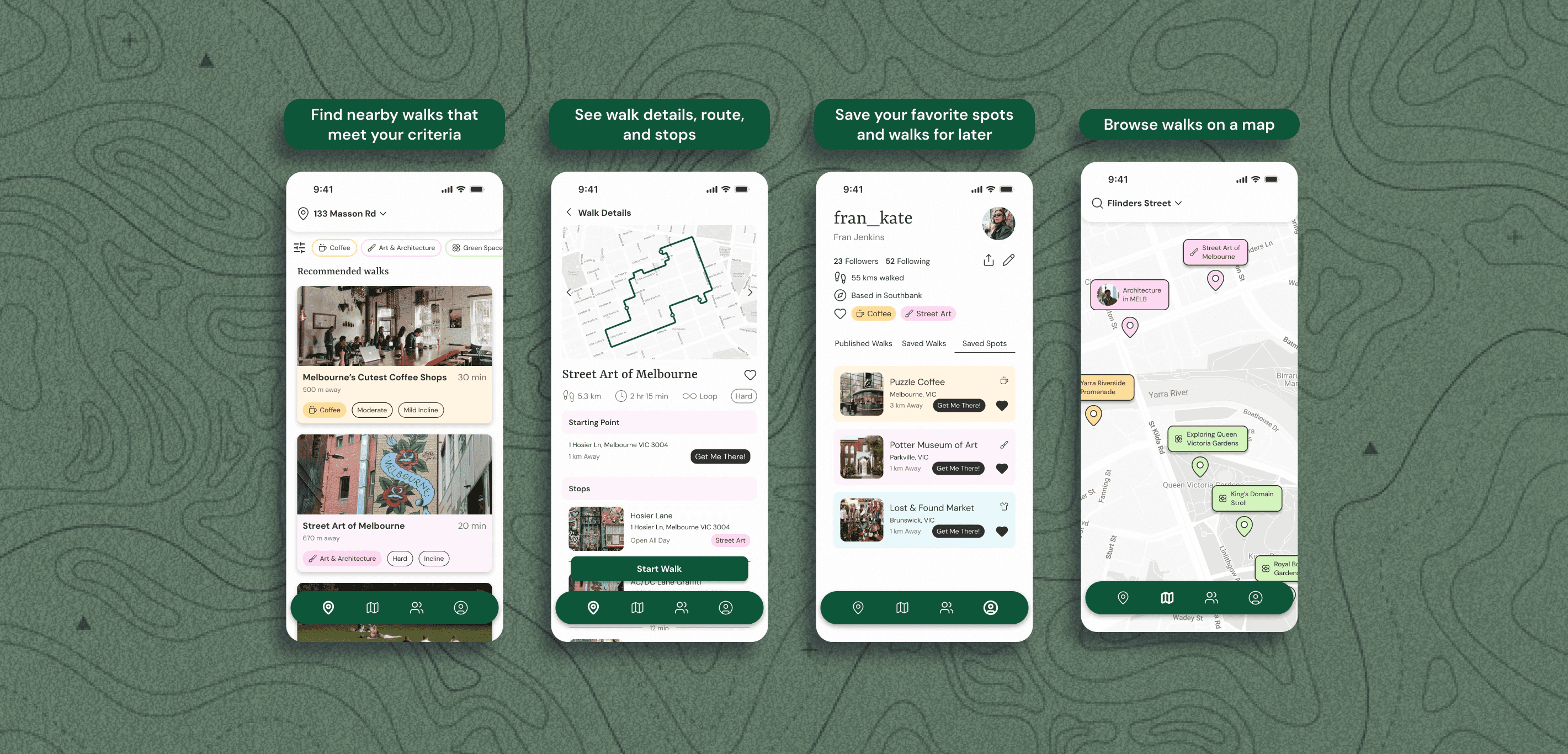
Browse walks
Users can browse walking routes near them, with personalised recommendations based on walks they’ve enjoyed previously and preferences set in their profile. Walks can also be explored by key characteristics: types of stops (coffee, sweet treats), overall vibe (green spaces, city, art & architecture), and practical filters like length, difficulty, and incline.
Go on a walk
Each walk includes an overview with route details, directions to the starting point, and the stops available along the way. Once started, in-app directions guide users through the route and between stops as they walk.
Social features
Users can create and share their own walks, and browse routes created by other community members.
Save your favorites
Favorite walks and spots can be saved to a profile for easy return, so users can come back to them later.
Creating community connection
Detour was created in response to the product-thon Track 1 brief, centered on community:
"To design an innovative platform that fosters a stronger sense of connection and creates new opportunities within Melbourne, by linking the people, places, and experiences that make the city unique and dynamic."
The brief placed particular emphasis on strengthening relationships between Melburnians, local small businesses, and the city’s many “third spaces”—encouraging everyday interactions that support local culture and community.
Within this track, we chose to focus on one of the most mundane yet underutilised touchpoints with the city: the daily walk. Rather than designing for one-off experiences, we explored how small, repeatable interactions embedded into existing routines could help people connect more deeply with Melbourne as they move through it each day.
The three-day project timeline
Detour was designed and built over a three-day hackathon, requiring us to make rapid decisions, avoid scope creep, and move quickly from idea to execution.
Day 1: Ideation & Research
We began by brainstorming based on our own experiences as Melburnians, then spoke with others to prioritize our ideas. This helped us define the core problem we wanted to tackle. From there, we talked through potential functionality with users to flesh out the idea.
Day 2: Feature Prioritization & Sketching
Once we had a concept, we spent the second day working out the details of the functionality. We created a sitemap and determined prioritization of features, then translated these into low fidelity sketches. We also used moodboards to gather aesthetic inspiration and defined the branding and aesthetics of the app.
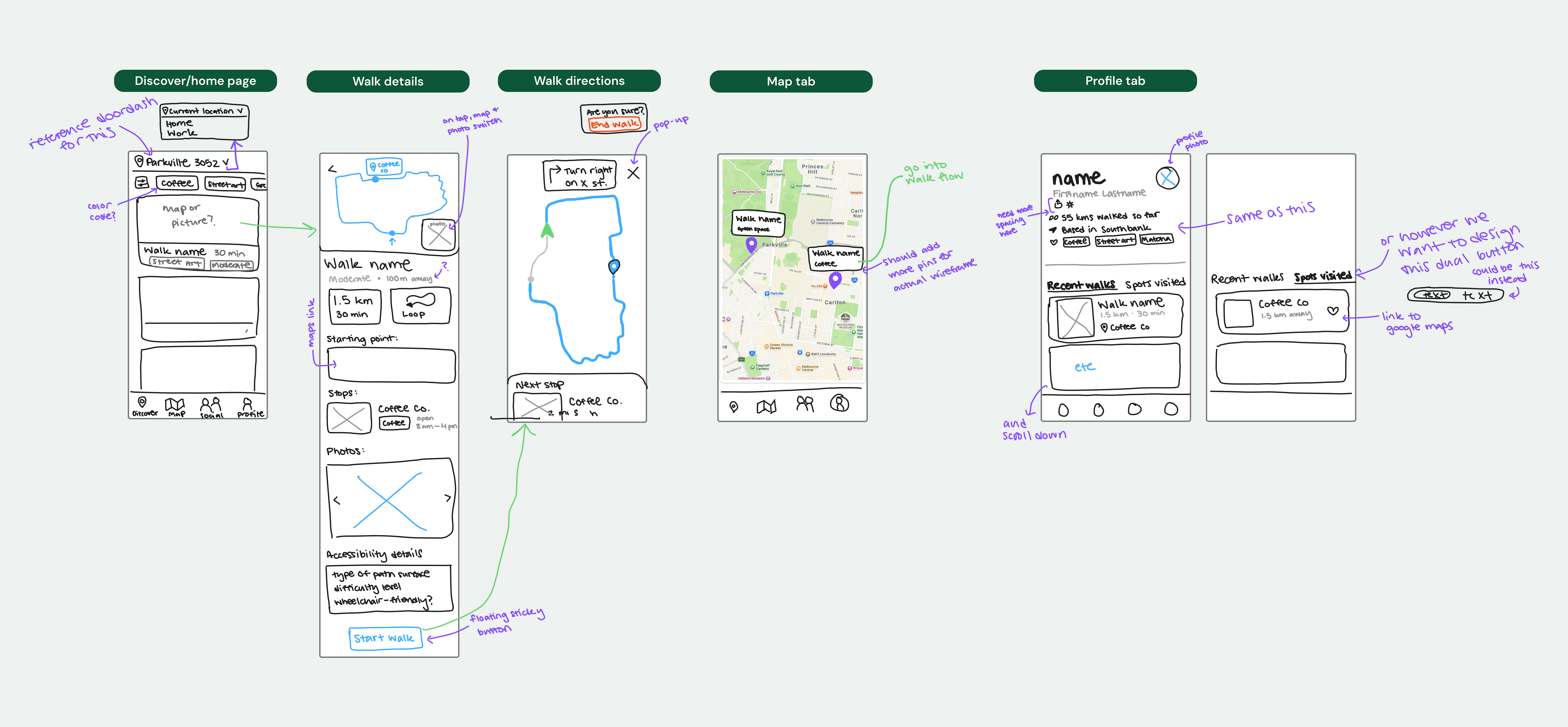
Initial sketches
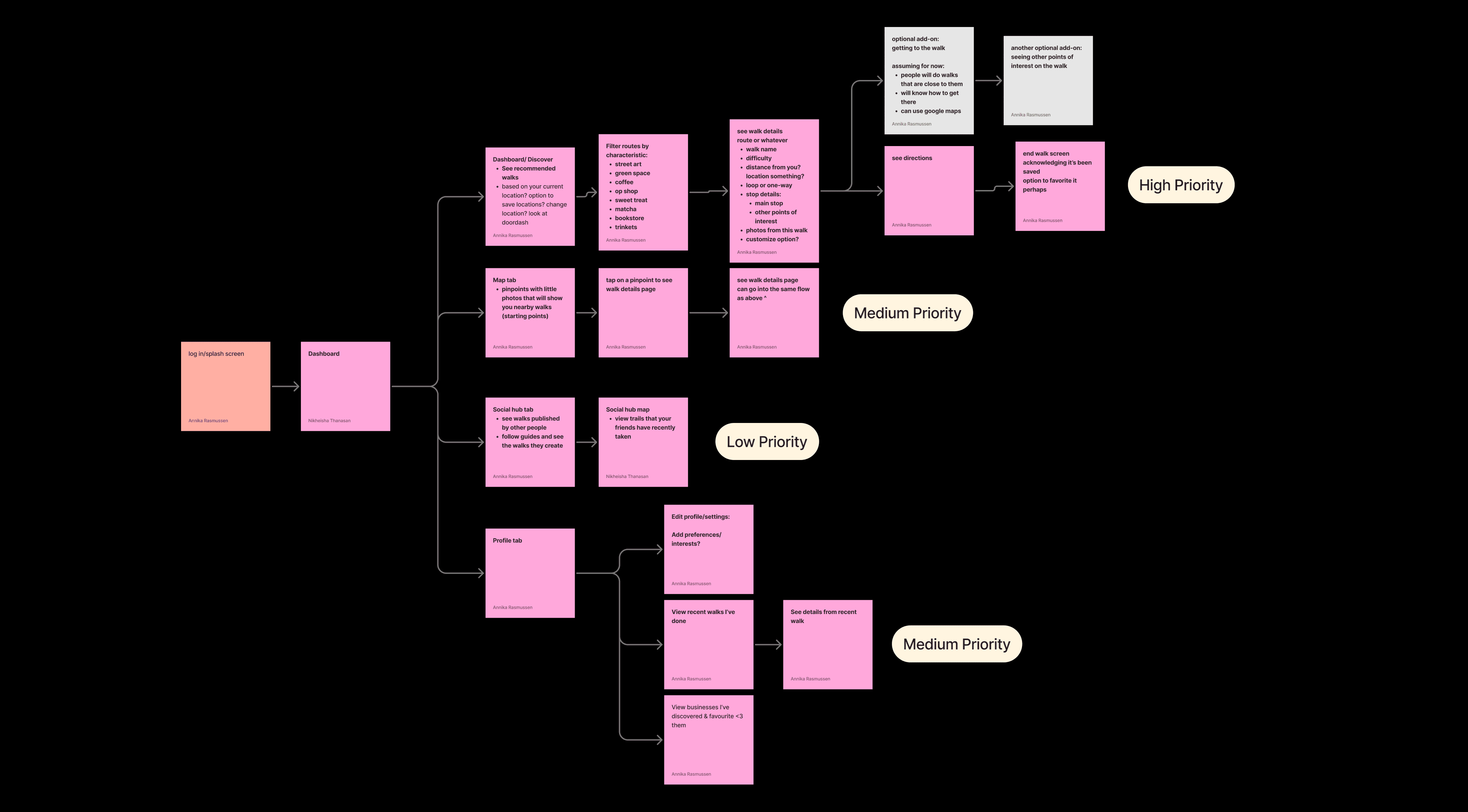
Sitemap
Day 3: Hi-Fidelity Prototype & Presentation
On the final day, we translated our sketches into high-fidelity designs and conducted walkthroughs to catch any glaring usability issues. We then prepared our final presentation and presented to a panel of three judges.