
Junkyard, a board game
A cozy, post-apocalyptic board game.
00
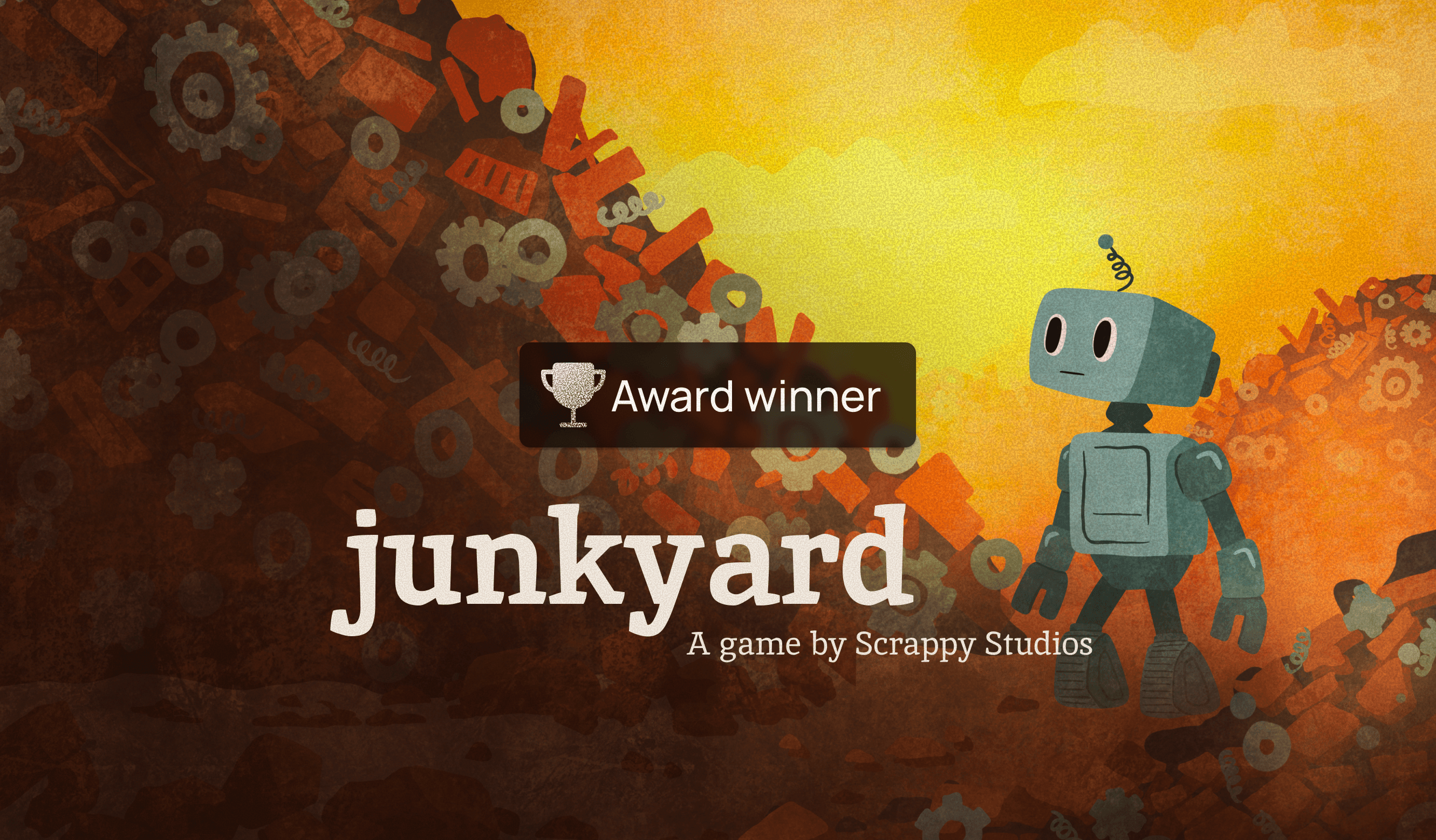

Best Prototype at Melbourne Design Week's Cybernetic Futures Showcase
Problem Overview
For this assignment, we were tasked with creating a euro-style board game, playable in 40 minutes.
At the same time, we developed Junkyard as a submission to the Melbourne Design Week – Cybernetic Futures Showcase, a program focused on speculative, science-fiction prototypes that imagine future worlds and evolving relationships with technology.
Project Overview
We created Junkyard, a family drafting game set in a post-human world. In Junkyard, players take on the role of lonely scavenger robots in a trash-covered landscape, scavenging parts from the junkyard to repair and rebuild old, discarded robots.
The game explores themes of consumption, waste, and unintended consequences: drafting choices aren’t just about what you need, but what you leave behind for others. Players are rewarded for planning carefully and penalised for taking more than necessary.
At the same time, Junkyard is about community and care. Every robot you repair helps you in return, emphasizing the importance of connection and kindness and proposing a future where healing starts by mending what’s been thrown away.
Junkyard is a family drafting game set in a bleak yet heartwarming post-human landscape. Players take on the role of lonely scavenger robots in a trash-covered landscape, picking through scrap piles to salvage gears. With these gears, players repair their fellow run-down robots, each with a unique personality and special abilities that shape gameplay.
At its core, Junkyard is about finding beauty in the overlooked and discarded, building community even in challenging conditions, and consuming mindfully.
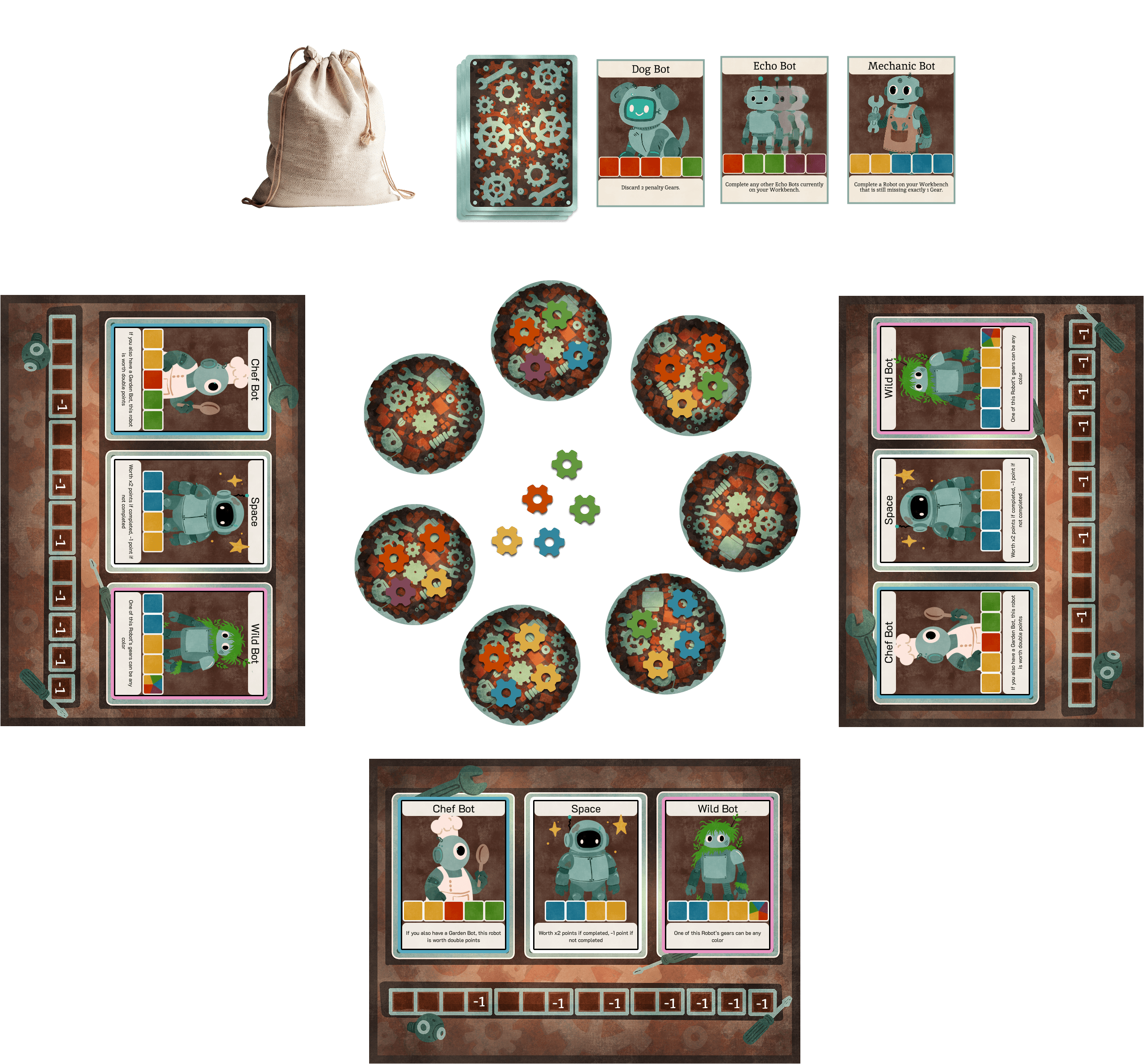
The setup of the game.
The rules
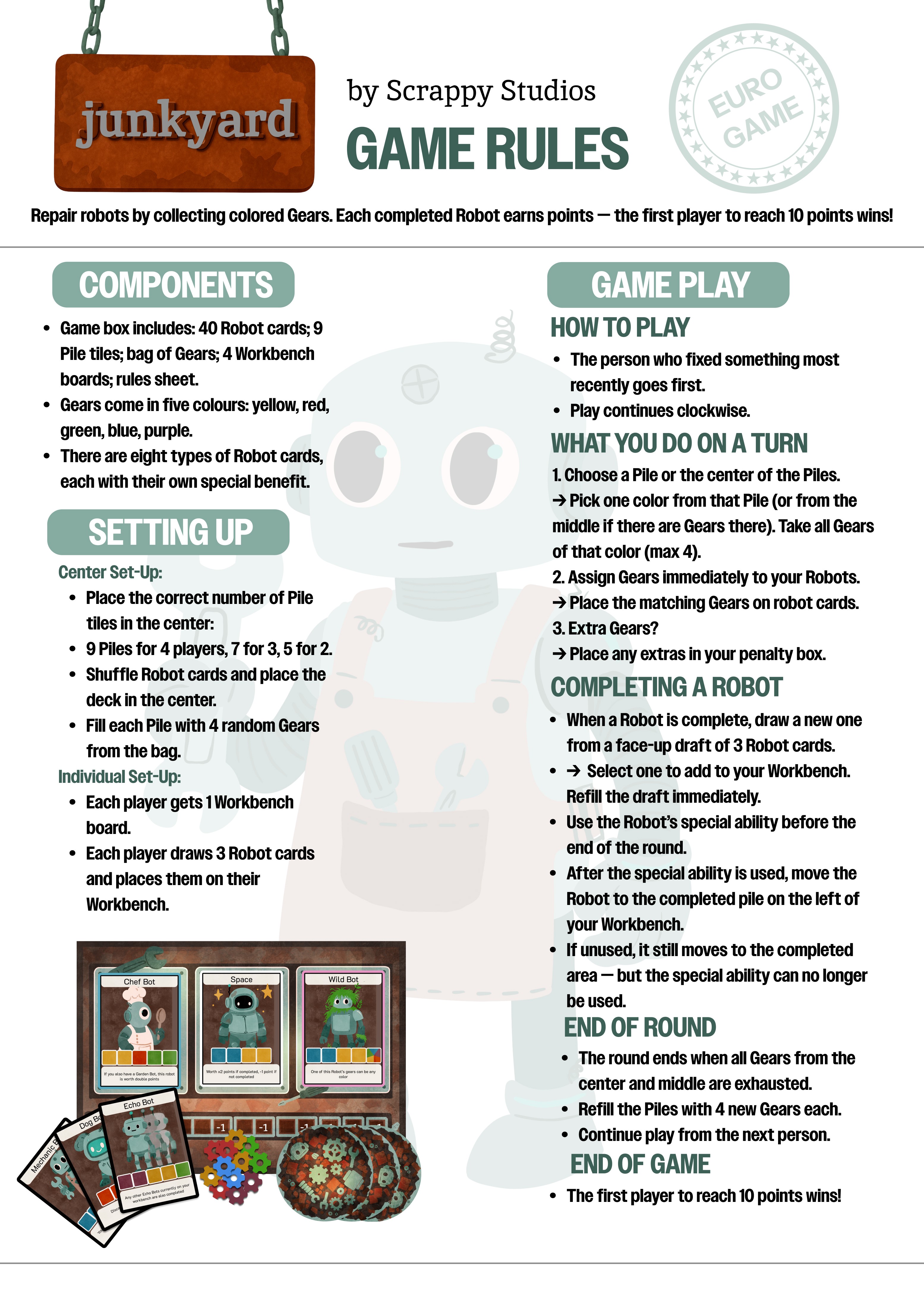
The first prototype
My initial idea going into this game was to create a heartwarming, aesthetically pleasing sci-fi game. I knew that I wanted to hand-illustrate it all. From our initial ideation, we drew on inspiration from properties like WALL-E and The Wild Robot, and other beloved drafting games such as Azul and 7 Wonders.
We created a basic first prototype in Figma to use in playtesting as we fleshed out the mechanics of the game.
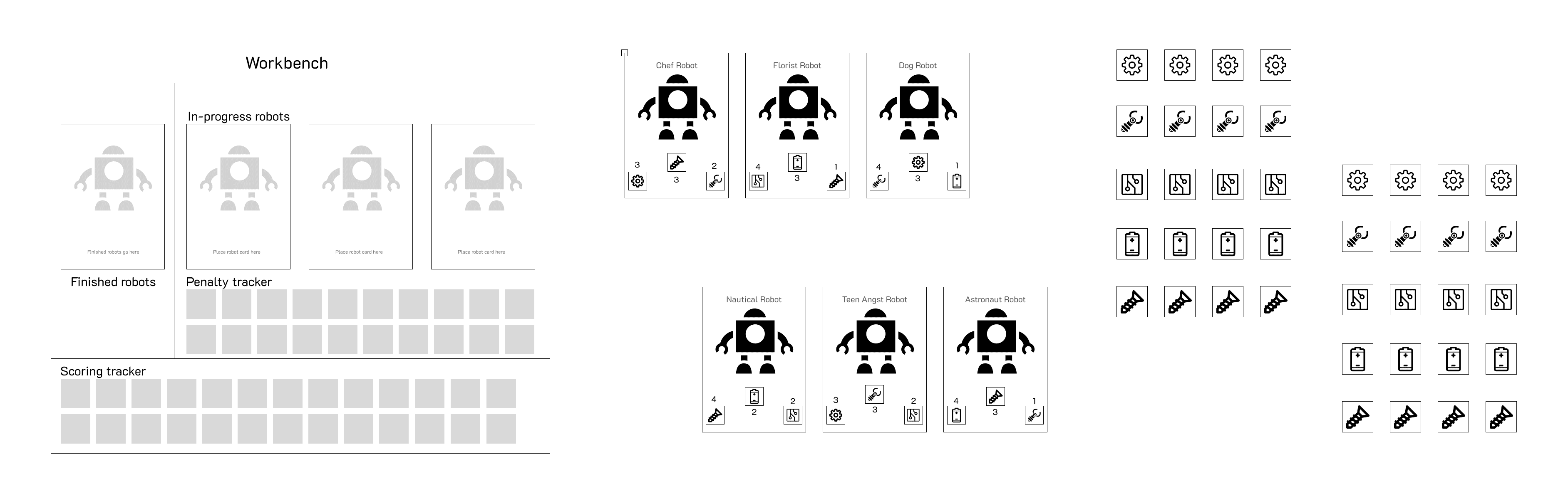
Initial wireframes created for playtesting.
We refined the idea with playtesting & iteration.
We conducted two main playtesting sessions. The first was with a low fidelity prototype of the game, and was intended to test the premise and core mechanics of the game. In the second, we focused on testing the balance and pace of the game, and some new mechanics we had introduced. Below are the key issues we discovered and addressed as a result of these sessions.
Playtesting session #1
The theme & core mechanics worked well.
We validated that players enjoyed the theme of the game, and core mechanics operated well.
We needed to adjust resource allocation mechanics.
The last player drawing from the pile in a round would often be forced to take many resources they couldn’t use, resulting in overly harsh and unavoidable penalties which frustrated players. This resulted in an unintended strategy: the game became more about minimizing penalties than trying to fix robots.
Gameplay was too repetitive.
Players noted they wanted to feel an additional reward or sense of progress along the way. They could only take one main action during their turn, which meant that gameplay and strategy didn't change much over the course of the game.
In response to this, we introduced round condition cards, which were drawn at the start of the round and affected certain actions or types of robots for the duration of that round.
Playtesting session #2
Round condition cards were too targeted
Round condition cards were too targeted and often only benefited one player due to the low probability of drawing relevant affected robot cards from the deck.
We adjusted the concept of round condition cards and instead created robot benefits: a special ability that players can use when they finish a robot. This gave players an additional sense of progress through mini rewards throughout gameplay, and added disruptions that prevented repetitiveness.
Meaningful decisions were still sparse
Players still had limited opportunities to strategize and plan ahead. We addressed this by introducing a robot draft (where players can pick from one of 3 robot cards when drawing a new one, rather than drawing one randomly). In combination with robot benefits, this provided additional interesting decisions for players to make on their turn.
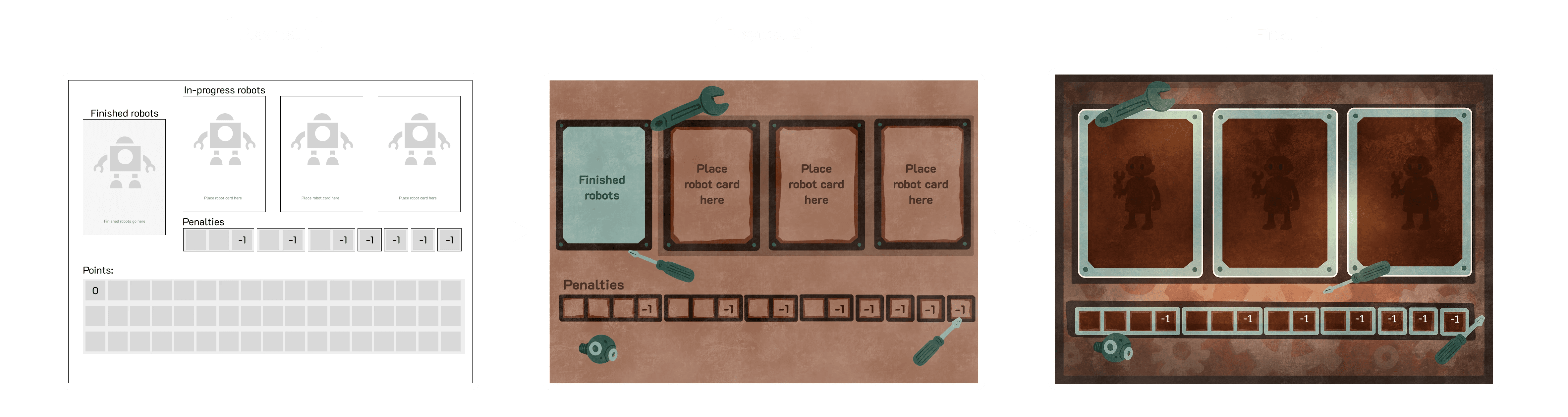
Iteration on the player workbench mat over each playtesting session.
Results
We were selected to present our work in the Melbourne Design Week Cybernetic Futures Showcase, where we had the chance to exhibit Junkyard to game aficionados, academics, and game publishers alike. At the exhibition, we received the award for Best Prototype from the judges.
The game was extremely well-received by audiences, with players praising it for having stunning and adorable visuals, and for creating lighthearted, family-style play.